GorillaDesk pricing starts at $49 per month for the Basic plan and scales by the number of routes rather than users, with annual billing offering an 8.3% discount. For a pest control business, the headline rate is only the starting point because additional schedules and SMS messaging can change the monthly bill.
A small pest control crew may begin with one recurring route, several technicians, and an office manager who all need access to the same customer records. The important question isn't how many people log in. It's how many schedules the operation needs, and whether customer texting is added to the subscription.
The Per-Route Pricing Model Explained
For a pest control crew, the subscription cost changes when the operating model adds routes, schedules, or territories. GorillaDesk describes its plans as route-based and includes unlimited users, according to its official explanation of route-based pricing. Technicians, dispatchers, and office staff can therefore access the same records without each login automatically creating a separate seat charge.
A company running one active schedule might have several employees using the account. The relevant cost variable is the schedule assigned to the work. Splitting service territories, creating a separate technician route, or opening another operating area can increase the subscription even if the staff roster stays unchanged.

Why route count matters more than headcount
Seat-based software increases its subscription cost as an owner adds dispatchers, administrators, or technicians. GorillaDesk shifts the calculation toward how service work is organized. Adding a dispatcher may not change the subscription, while adding a distinct schedule can.
For budgeting, separate these operating decisions:
- Route expansion: New schedules can raise the bill, so territory design and technician assignments affect software costs.
- Route consolidation: Fewer schedules may limit subscription growth if dispatchers can still assign work and technicians can complete services effectively.
- User access: Unlimited logins mean a growing office team can share account visibility without adding a separate seat charge.
This model can suit a pest control business with many people managing recurring accounts across a limited number of structured routes. Its cost exposure appears when growth requires additional schedules rather than additional employees. A crew should therefore estimate route expansion and customer messaging separately, because the base route structure does not capture every possible monthly charge.
Core Subscription Tiers and Annual Discounts
GorillaDesk's published pricing lists three public tiers, Basic, Pro, and Growth, with monthly and annual billing options on its official pricing page.
| Plan Name | Monthly Rate | Annual Rate | Effective Discount |
|---|---|---|---|
| Basic | $49 per month | $539 per year | About 8.3% |
| Pro | $99 per month | $1,089 per year | About 8.3% |
| Growth | $149 per month | $1,639 per year | About 8.3% |
The annual prices follow one clear rule: each equals eleven monthly payments. The practical discount is therefore one free month, rather than a separate percentage-based rate cut. That distinction matters because the saving stays tied to the selected tier. It does not offset schedule charges, SMS usage, or other communication add-ons.
What the annual option really changes
Annual billing reduces the first-year subscription cost by one monthly payment, but requires the business to commit cash earlier. Monthly billing costs more over a full year while preserving flexibility for a seasonal pest control operator whose route volume changes during the year.
Budgeting rule: Compare the value of one free month with the cash-flow cost of paying for the year upfront.
The public page calls the upper tier Growth. GorillaDesk's help documentation treats plan and schedule behavior as separate matters, so owners should verify the plan name, schedule count, and billing term shown at checkout. An older quote or third-party listing may not reflect the current configuration.
The tier choice also affects how a growing crew interprets its base cost. Basic may fit an operation whose current work sits within one schedule. Pro or Growth may become relevant when the business requires higher-tier capabilities or expects its route structure to expand. Those plan prices are only the starting point for a per-route budget. Additional schedules can raise the subscription separately, while customer texts and other messaging activity can add communication costs that the tier table does not show.
For a small pest control company, the annual decision should therefore follow a route and messaging forecast. A business with stable schedules and predictable cash flow may value the lower first-year total. A seasonal operator adding routes or sending more customer updates may prefer monthly billing until actual usage is clearer.
Calculating Costs for Additional Routes
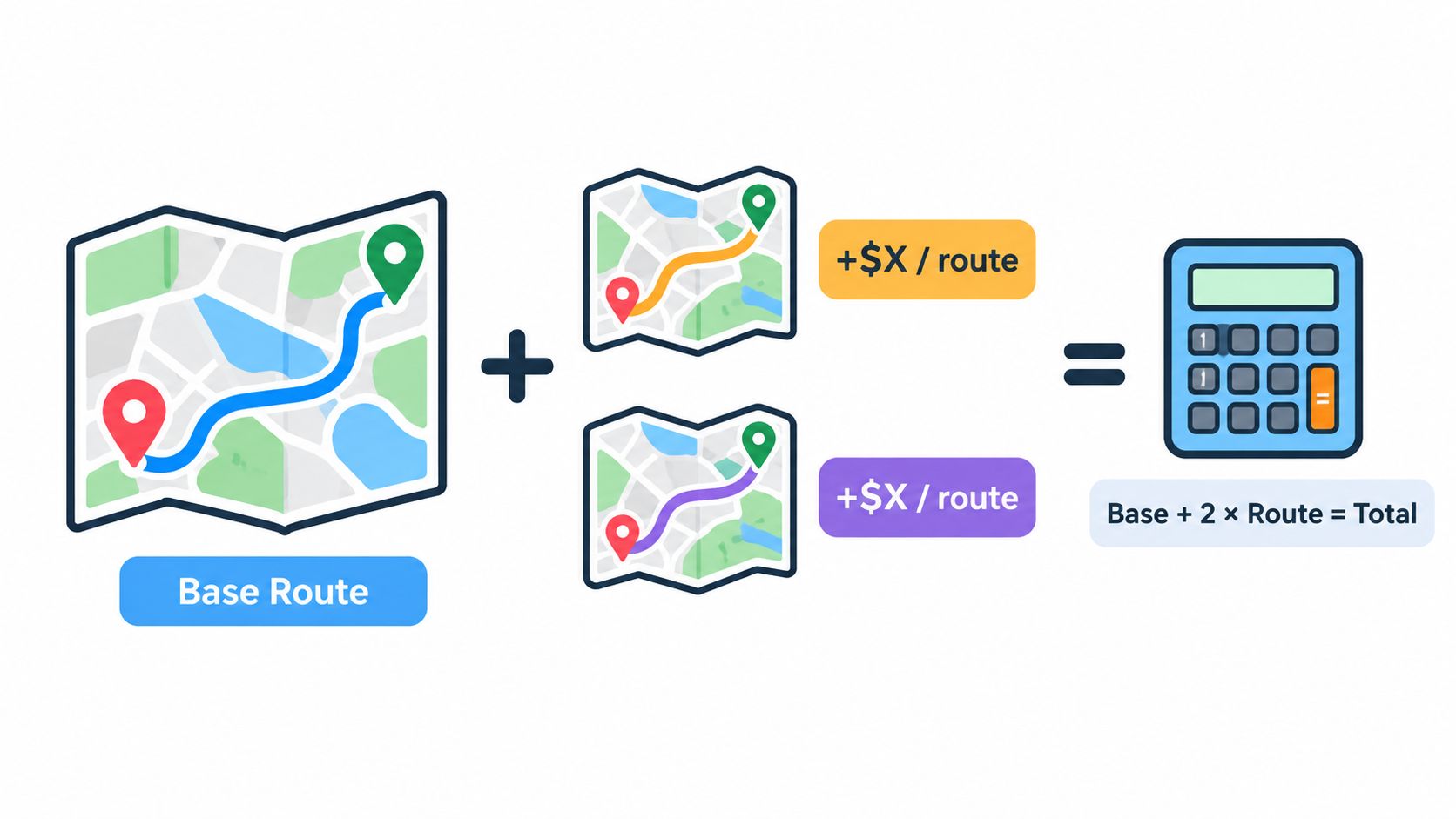
GorillaDesk's help center documents additional schedule pricing for the lower tiers. Basic starts at $49 per month for the first schedule and adds $50 for each additional schedule. Pro starts at $99 per month and also adds $50 per additional schedule, as described in the vendor's plans and pricing documentation.
The calculation is straightforward:
Base plan price + ($50 × additional schedules) = subscription price before SMS
For Basic, the first schedule is included in the $49 starting price. A second schedule adds $50, making the subscription $99 per month before any SMS charge. A third schedule adds another $50, making the subscription $149 per month before SMS.
The same structure applies to Pro. The first schedule starts at $99 per month. A second schedule brings the base subscription to $149 per month, and a third brings it to $199 per month, before messaging fees.
Why technician growth and route growth aren't the same
A company can add technicians without immediately adding schedules if several technicians work within one shared route structure. That may keep the subscription stable, but it could create dispatch complexity if technicians need distinct calendars, territories, or recurring service assignments.
The reverse can also happen. A company may keep the same office team while creating another schedule for a new territory. In that case, the software cost can rise even though the number of users stays unchanged.
| Operating change | Likely pricing question |
|---|---|
| Add an office administrator | Does the unlimited-user policy cover the new login? |
| Add a technician to an existing schedule | Can the technician work within the current route structure? |
| Create a separate geographic schedule | What is the additional schedule charge? |
| Split one route into separate recurring calendars | Does each calendar count as another schedule? |
GorillaDesk's help center also references a plan variant with a $65 per-user starting point, which makes it important to confirm the exact plan structure offered to the business before signing. The route count, schedule definition, and any plan-specific user rule should be documented in the quote or account setup.
SMS Messaging Fees and Communication Add-Ons
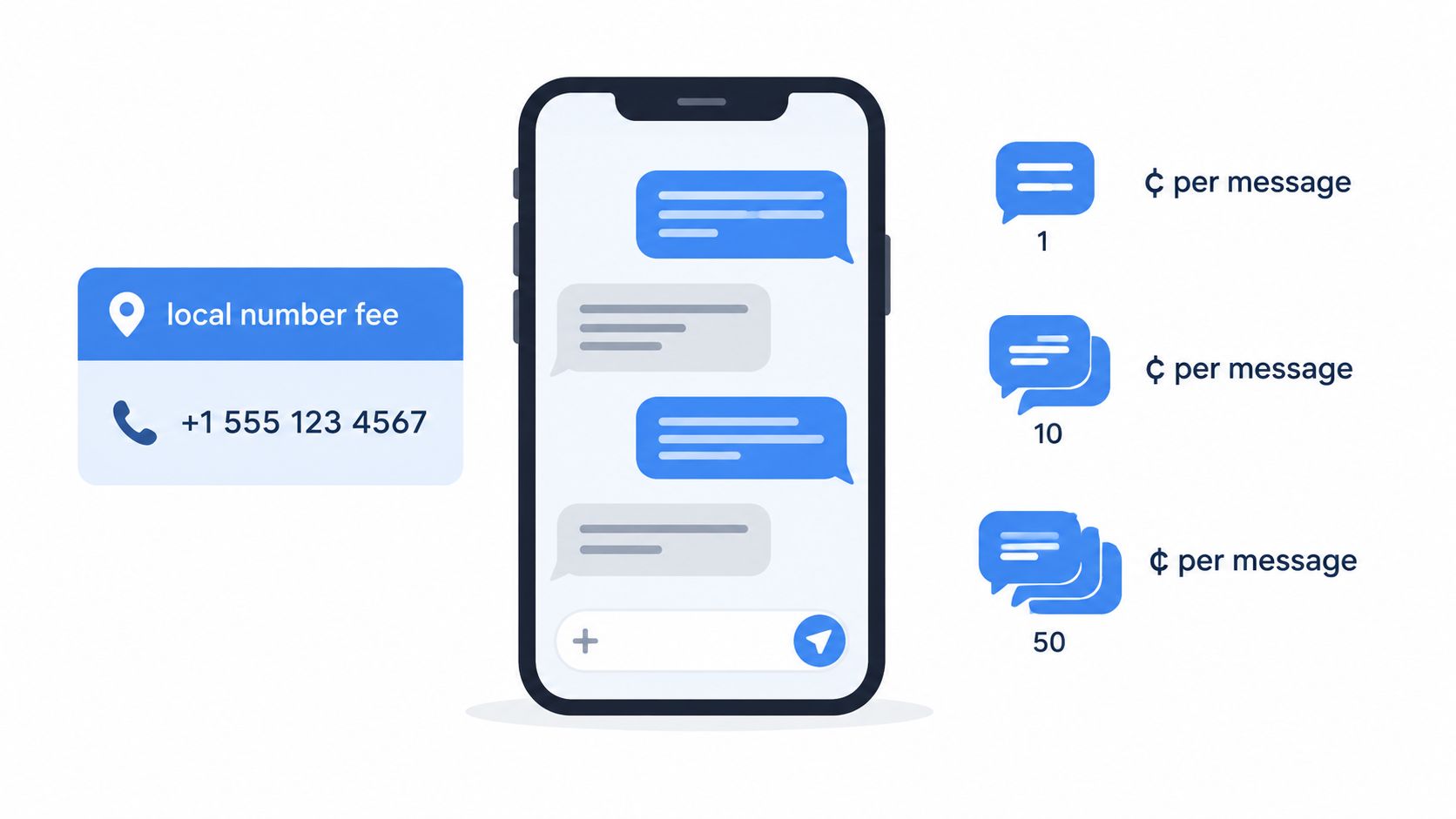
Text messaging changes the effective cost of each route because it adds a separate communication charge to the subscription. GorillaDesk states that activating SMS requires $5 per month to rent a local SMS number, according to its help center.
That fee sits outside the advertised $49 Basic starting rate. For a pest control crew, the relevant calculation includes the plan, the schedules needed for its routes, and the communication tools used for reminders, arrival notices, and recurring treatment updates.
Separate fixed and variable SMS costs
The local number rental is a fixed monthly add-on. Message usage is a separate variable cost to verify with GorillaDesk. The published information confirms the number fee, but it does not establish a current per-message rate or package price.
This distinction matters for seasonal operations. Route subscriptions may remain stable while text volume rises during busy appointment periods or recurring treatment campaigns. A workable budget should therefore track:
- Core subscription: The selected plan and its included schedule.
- Additional schedules: The charge for each route or schedule beyond the included amount.
- SMS number: The separate $5 monthly local-number fee.
- Message usage: Any per-message, carrier, registration, or overage charges confirmed for the account.
The help center identifies SMS as an extra charge, but the vendor should confirm the complete messaging terms in writing. Renting a local number does not establish that outgoing messages are unlimited or included.
Ask for the SMS terms in writing: A local number rental explains the number cost, not the complete cost of sending customer messages.
For example, a Basic plan with two schedules and texting reaches $154 per month before message usage, more than triple the $49 headline rate. That figure shows why growing pest control crews should price communication and route expansion together rather than evaluate SMS from the base subscription alone.
Free Trial Terms and Initial Setup
GorillaDesk offers a 14-day free trial with full access to all features, and no credit card is required to start it, according to the GorillaDesk website. Billing begins after the trial ends on the plan selected by the customer.
The trial gives a pest control owner a chance to test the pricing model against the actual operating structure. The most useful evaluation isn't just opening the dashboard. It is building representative schedules and checking how the account behaves when users, routes, and customer communication are added.
A practical trial sequence
- Create the account without a card. The vendor says no credit card is required to begin the 14-day trial.
- Build a representative route. Use the recurring schedule structure the business expects to maintain.
- Add the office users. Confirm that the unlimited-user policy applies to the account and plan being evaluated.
- Model another schedule. Check how the account displays the added route and what price appears before conversion.
- Test SMS separately. Confirm the local number fee and any usage terms before enabling messaging.
- Set a billing reminder. Billing begins after the trial on the selected plan, so the owner should decide before the trial closes.
The trial is most valuable when it tests the decisions that affect cost. A single-route demonstration can make the software appear inexpensive, while a multi-schedule setup may produce a different monthly result.
Pre-Purchase Questions for the Vendor
A public pricing table cannot answer every contract question. A pest control owner should ask GorillaDesk for written answers before choosing monthly or annual billing, especially when the operation expects to add routes or rely heavily on customer messaging.
Pricing and expansion
- Schedule definition: What exactly counts as a route or schedule for billing?
- Additional schedules: Does every new technician calendar create another paid schedule?
- Plan transition: What happens when the account moves from one plan tier to another?
- Future increases: Does the agreement provide advance notice or protection against price changes?
- Annual billing: If the company cancels early, is any unused annual period refundable?
Data and cancellation
- Data export: Which customer, service, invoice, and schedule records can be exported?
- Export format: Are the records delivered in a usable format after cancellation?
- Access period: How long can the company retrieve data after the account closes?
- Cancellation timing: What notice is required for monthly and annual subscriptions?
- Account ownership: Who owns customer records, treatment history, and uploaded documents?
Messaging and payments
- SMS usage: Is the $5 local-number fee the only fixed messaging charge?
- Message costs: Are message usage fees, carrier charges, or overages applied?
- Number transfer: Can an existing business number be transferred to the service?
- Payment processing: What card, ACH, or other transaction fees apply to customer payments?
- Refunds: Who handles payment disputes, refunds, and chargebacks?
A vendor answer that appears only in a sales call is harder to use later than a written answer attached to the order or contract. The owner should keep the final pricing, schedule count, SMS terms, cancellation policy, and data-export terms together.
Contract Flexibility and Billing Logistics
Monthly billing usually fits a pest control company that is still deciding how its territories should be organized. It keeps the commitment closer to the current route count, which can matter when seasonal demand changes staffing or when a new service area is still being tested.
Annual billing offers the published saving of one month compared with twelve monthly payments, but it requires the company to commit earlier. That choice isn't only about the discount. It is also about whether the business expects its route structure and plan level to remain suitable throughout the billing period.
A simple operating example
A one-route company can start with Basic at $49 per month. If it creates a second schedule, the documented additional-schedule charge changes the subscription calculation. If it then activates texting, the local SMS number adds another fixed monthly charge.
The office manager should record each change when it happens:
- New schedule: Update the base subscription calculation.
- New plan: Confirm whether the plan has a different route or user rule.
- SMS activation: Add the local number fee and verify usage terms.
- Annual renewal: Recheck route count and plan requirements before renewal.
GorillaDesk's public trial terms state that billing begins after the 14-day trial on the selected plan. Cancellation timing, refunds, post-cancellation access, and data export should still be confirmed directly with the vendor because those terms aren't established by the verified pricing facts.
Cash-flow practice: Annual billing works best when the business can carry the commitment without depending on an uncertain route expansion.
The administrative burden is modest if the account owner reviews schedule count and add-ons before each renewal. It becomes harder to control when a company treats the headline plan price as the full subscription and never reconciles the account against its active routes.
Evaluating Fit for Pest Control Operations
A three-schedule pest control operation using texting would pay $199 per month on Pro before message usage, compared with $99 for one route. That $100 difference is the practical test for fit: the owner must decide whether the added route capacity and user access cost less than a flat-rate competitor.
Strong fit
The model suits small operators that need several people to work inside one account. Unlimited users can allow technicians, dispatchers, and administrators to share access without a separate seat charge for each person. That benefit matters most when the company has a limited number of recurring schedules and wants broad office access.
The model can also work for a growing company if its route plan is stable enough to forecast. A manager should calculate the subscription from the schedules expected during the billing period, then add any communication charges that sit outside the plan.
Caution points
Frequent territory splits create a less predictable bill. Each added schedule can increase the subscription, while the local SMS number adds a separate $5 monthly fee before message usage. A headline plan price therefore understates the account's likely operating cost when a crew expands across multiple calendars and relies on texting.
A flat-rate alternative may be easier to budget for a company expecting repeated route additions. Its starting price could be higher, but a fixed structure may provide better cost control if expansion would otherwise trigger repeated schedule charges.
The decision
GorillaDesk fits small and growing pest control operations built around recurring routes when shared user access has clear operational value. It is a weaker fit when the company needs one unchanged monthly charge regardless of route count.
Before the trial, the owner should list current schedules, planned territory splits, required users, and whether texting is part of daily operations. During the 14-day trial, the team can test that structure, verify the displayed subscription, request written SMS and cancellation terms, and retain the final agreement for billing review.
The operating decision should use total monthly cost, not the entry price alone. Compare the route-adjusted subscription, the $5 SMS number fee, expected message usage, and the cash commitment under annual billing. If those costs remain below the value of simpler dispatch and shared access, the model may fit. If route growth is uncertain, monthly billing provides a safer test of the actual account cost before a longer commitment.