For a one-to-twenty-person HVAC company, Housecall Pro is usually the better fit because it offers transparent pricing, a free trial, and easier onboarding. FieldEdge is better suited to an established contractor that needs deeper operational control and can accept higher costs and a sales-only entry model.
The decision often arrives after a familiar week of missed calls, emergency dispatches, handwritten equipment notes, and invoices waiting for office attention. The owner wants technicians moving, customers informed, and maintenance agreements renewed without adding another full-time administrator. The wrong platform can make that week harder by forcing a small crew to learn processes designed for a much larger operation.
Housecall Pro and FieldEdge solve the same broad problem, but they approach it from different directions. Housecall Pro favors accessible, cloud-based workflows for smaller teams. FieldEdge favors structured HVAC operations, formal dispatch control, and deeper service-agreement management. The difference matters more than a long feature checklist.
| Business need | Housecall Pro | FieldEdge |
|---|---|---|
| Best general fit | Owner-operators and small HVAC teams | Established HVAC, plumbing, and electrical contractors |
| Product orientation | Mobile-first and easier to deploy | Contractor-focused and operationally structured |
| Pricing model | Published subscription pricing | Sales-led quote |
| Trial access | 14-day free trial | No free trial |
| Scheduling and dispatch | Drag-and-drop scheduling and real-time dispatching | Skill- and geography-based dispatching |
| HVAC controls | Recurring jobs, estimates, invoices, payments, customer communication | Service agreements, flat-rate price book, equipment records, operational reporting |
| QuickBooks connection | QuickBooks connectivity | QuickBooks integration, with sync details requiring confirmation |
| Main trade-off | Lower rollout friction, less formal control | Greater control, more implementation and cost uncertainty |
Understanding Housecall Pro and FieldEdge
A one-person HVAC shop can lose a week of productive time to a software rollout that a twenty-person operation would absorb through dedicated administration. That difference shapes the Housecall Pro vs FieldEdge decision. Both platforms can support the path from customer request to completed job, but they place different demands on training, process control, and pricing discovery.
Two different starting points
Housecall Pro was founded in 2013 in San Diego as a consumer-facing home-service booking application, then shifted toward contractor software and adopted the Housecall Pro name in 2015. By December 2019, it reported serving more than 15,000 home-service businesses across HVAC, plumbing, electrical, cleaning, and pest control, as described in this company history and business overview.
That background helps explain its mobile workflow. Scheduling, dispatch, estimates, invoices, payments, customer messaging, and field access sit close to the center of the product. For a small office, a cloud-based system with a self-serve monthly subscription can reduce the time spent comparing vendors, arranging demonstrations, and building a custom rollout plan.
FieldEdge has a longer contractor-software history. Its predecessor, Coastal Computer Corporation, was founded by HVAC contractors George and Glenn Slay in 1980, and its first product, Theos, helped HVAC businesses manage field operations. FieldEdge's history therefore reaches back roughly 33 years before Housecall Pro's launch, according to this FieldEdge and Housecall Pro company history.
That background points to a different operating fit. FieldEdge developed around contractor processes such as dispatch rules, a flat-rate price book, equipment records, maintenance agreements, and office reporting. Those controls can support a larger or more process-driven shop, but they may also require more configuration, staff training, and vendor involvement before the team sees value.
What the distinction means for a small crew
Housecall Pro's company-reported figures include more than 200,000 home-service professionals and over 100 million completed jobs, although those figures aren't independently audited. A separate review reported approximately 25,000 customers when Housecall Pro raised $125 million from Permira Growth Opportunities and Vista Credit Partners in June 2022, as reported in this Funding announcement.
Scale does not settle operational fit. Before signing, a small residential company should confirm user roles, payment terms, data exports, offline behavior, accounting sync, onboarding requirements, and any setup charges. A monthly price that looks clear at checkout may still leave training and migration work with the owner.
FieldEdge says it has more than 40,000 users, while an independent industry listing describes coverage across more than 30 service verticals. That scale supports a formal operating model, though the sales-led quote makes the total cost harder to assess before a conversation with the vendor.
Practical rule: A small HVAC company should not pay for operational depth until the office can name the process that requires it.
Feature Comparison for HVAC Operations
HVAC software has to handle more than appointment times. The office needs to see which technician is available, what skills are required, whether a customer has an active maintenance plan, what equipment sits at the property, and whether the job can move from quote to payment without re-entry.
The platforms cover that work differently. Independent comparisons describe Housecall Pro as mobile-first and easier to deploy, with drag-and-drop scheduling, real-time dispatching, online booking, customer messaging, QuickBooks connectivity, and field invoicing. FieldEdge is positioned as a more structured system, with skill- and geography-based dispatching, a visual flat-rate price book, equipment and inventory records, service-agreement automation, and actual-versus-planned sales reporting. These differences are summarized in this Housecall Pro and FieldEdge feature comparison.
| Key feature comparison for HVAC | Housecall Pro | FieldEdge |
|---|---|---|
| Scheduling | Drag-and-drop scheduling suited to a small office | Structured scheduling with dispatch rules based on geography and technician skills |
| Dispatching | Real-time dispatching and mobile access | Smart Dispatching designed to match technicians by location and skill |
| Estimates and quotes | Estimates that can move into invoices and payments | Proposal tools and controlled flat-rate pricing through a visual price book |
| Invoicing | Mobile invoicing, invoice payments, and customer communication | Invoicing tied to broader operational and accounting workflows |
| Customer records | Customer history, communication, jobs, and payments | Customer, equipment, agreement, and service history records |
| Equipment data | Useful customer and job information, with import scope to verify | Equipment records and property-level service context are central to the workflow |
| Service agreements | Supports recurring jobs and service-agreement functionality | Treats agreements as a more central record type with renewal and profitability tools |
| Reporting | Accessible workflow reporting for a smaller operation | Actual-versus-planned sales reporting and more formal operational controls |
| Mobile work | Strong focus on field use and on-site payments | Technician workflow with deeper operational records to confirm during evaluation |
| Accounting | QuickBooks connectivity | QuickBooks integration, with sync direction and edition requiring confirmation |
Scheduling and dispatch
For a small HVAC office, drag-and-drop scheduling can be enough when one dispatcher knows the team personally and most work stays within a familiar service area. Housecall Pro's approach fits that environment. The office can schedule, dispatch, message customers, and let technicians work from a mobile device without building a complicated rules engine.
FieldEdge's Smart Dispatching is more relevant when technician capability and geography affect every assignment. An office may need to distinguish between a technician who handles a particular equipment type, a junior technician who needs a narrower call range, and a senior technician assigned to complex diagnostic work. That additional structure can help, but it also requires accurate skills, territories, availability, and work types.
Quotes, price books, and invoices
A visual flat-rate price book is a meaningful distinction for an HVAC company that wants every technician presenting the same labor and material pricing. FieldEdge's price-book model supports tighter governance. It can reduce the risk of technicians using personal notes or outdated spreadsheets, but somebody has to maintain costs, labor assumptions, options, and approval rules.
Housecall Pro is more attractive when the priority is getting an estimate approved, an invoice sent, and a payment collected without slowing the technician down. It also supports card and debit payments on invoices and in the field, check deposits through the mobile app without a fee, and consumer financing, according to the Housecall Pro pricing and payments page.
Service agreements and equipment history
Service agreements are where FieldEdge's depth becomes most important. Comparative analyses describe FieldEdge agreements as distinct records with automated renewal scheduling, contract-related profitability tracking, billing alerts, and customer and equipment context. Housecall Pro supports recurring jobs and service-agreement functionality, but its simpler approach may be sufficient for a company selling recurring visits without complicated contract rules.
An HVAC owner should ask whether the system records agreement start and end dates, included visits, renewal status, unused visits, price changes, and contract-level profitability. The same questions apply to equipment history. A system that stores only a customer address won't provide the same value as one that organizes installed equipment, service history, and agreement status around the property.
Pricing Structures and Costs
A one-person HVAC shop can start a self-serve subscription after hours. A crew of twenty may need a price-book build, data cleanup, training, and accounting setup before the first technician uses the system. Those labor costs can matter more than the advertised monthly fee, especially when one vendor publishes a subscription and another requires a sales conversation before showing a quote.
Housecall Pro publishes a 14-day free trial and a subscription entry point of $59 per month, as shown on its official pricing page read October 9, 2026. The same page lists payment costs of 1% for bank payments and card-processing rates starting at 2.59%. An owner can therefore model the basic software cost against current cash flow, while still budgeting for transaction charges and any work required to configure the account.
Housecall Pro's payment tools suit an owner-operator who collects money at the jobsite. Customers can pay by card or debit on invoices and in the field, checks can be deposited through the mobile app without a fee, and consumer financing is available. Before signing, confirm whether the displayed card rate applies to every card type and whether gateway, platform, plan, or volume charges also apply. Payment processing can change the total cost of a low monthly subscription.
FieldEdge's quote-first model
FieldEdge's pricing page publishes no figure. FieldEdge also states that it doesn't offer a free trial because it prefers guided onboarding. Its published explanation is direct:
“It is not possible to offer a free trial because we prefer guided onboarding.”
That approach can suit a company that wants help setting up a price book, agreements, dispatch rules, equipment records, and accounting connections. It creates more coordination for a small shop that wants to test daily workflows independently before involving the owner, dispatcher, or bookkeeper.
Third-party market estimates have reported FieldEdge charges of $100 per office user and approximately $125 per technician, with initial setup commonly reported at $500 to $2,000. A separate example calculates that one office user and three technicians would cost $475 per month before taxes, payment fees, or optional modules, plus implementation. These figures are not an official current FieldEdge rate card, so treat them as prompts for a complete written proposal rather than as a quote. The comparison is discussed in this FieldEdge pricing and feature review.
The hidden cost is staffing
A self-serve plan keeps the buying process simple, but the owner or office manager absorbs configuration work. Guided onboarding costs more coordination and may add setup charges, yet it can prevent a crew from launching with incomplete pricing, inconsistent job statuses, or untrained dispatchers. For a one-to-twenty-person company, the right choice depends on who has time to do that work and how much operational control the business needs.
Request written answers about:
- Minimum seats: Confirm whether office users and technicians are billed separately.
- Setup scope: Ask which imports, training sessions, price-book work, and integrations are included.
- Payment costs: Separate the software subscription from card, bank, gateway, and financing charges.
- Contract terms: Confirm billing period, cancellation rules, renewal timing, and refund treatment.
- Data exports: Ask for the exact format and fields available if the company later leaves.
Implementation and Migration Considerations
A field-service platform rarely fails because scheduling exists or doesn't exist. It fails when the company imports dirty customer data, leaves the price book unfinished, skips technician training, or changes the dispatch process during the busiest part of the season.
Housecall Pro's self-serve model generally reduces the amount of coordination required to begin. FieldEdge's guided onboarding can provide more structure, but it also asks the business to prepare for a vendor-led project. The right choice depends on whether the company has time to configure the system internally or needs an implementation partner to organize a more formal workflow.
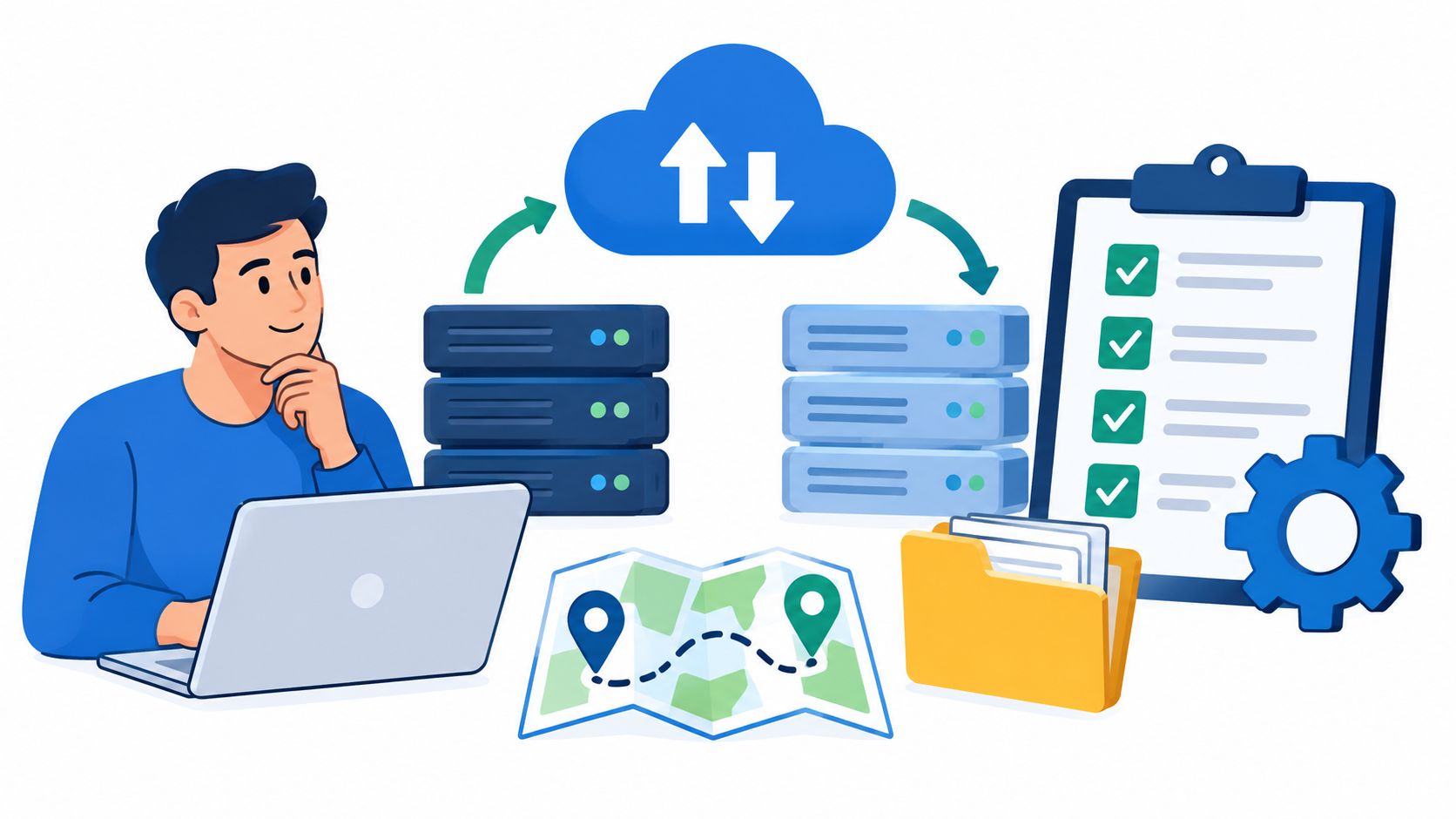
Prepare the data before choosing an import
An HVAC company should clean its records before asking either vendor to migrate them. Duplicate customers, old addresses, inconsistent phone numbers, missing equipment details, and outdated agreement records create problems no platform can solve automatically.
The migration list should include:
- Customer records: Names, service addresses, billing addresses, phone numbers, email addresses, and communication preferences.
- Job history: Completed work, estimates, invoices, technician notes, warranty details, and payment status.
- Equipment history: Manufacturer, model, serial number, installation date, location, and past repair information.
- Price-book data: Services, materials, labor assumptions, taxes, discounts, and approval rules.
- Agreement records: Start dates, renewal status, included visits, pricing, and equipment tied to each plan.
The exact import coverage requires confirmation. A buyer shouldn't assume that an export includes photos, attachments, agreement history, or property-level equipment records only because the platform supports those features after setup.
Build the workflow in a safe order
The office should configure customers and service areas before building dispatch rules. Next comes the price book, estimate templates, invoice fields, payment settings, agreement schedules, and accounting connection. Technicians should then receive a short set of realistic jobs, such as a diagnostic call, a maintenance visit, and a replacement estimate.
FieldEdge's guided onboarding may be useful where the business needs help connecting these parts. Housecall Pro's faster self-serve path may be preferable when the owner or office manager can configure a simpler workflow without waiting for a scheduled implementation session.
Migration rule: Export the old system before the new system becomes the only place where technicians record customer history.
A third-party review reports that monthly Housecall Pro subscriptions cancel at the end of the current billing period, while annual subscriptions cancel at renewal and may forfeit the remaining annual fee if ended early. The same review says cancellation and billing pauses require a phone conversation with the account owner, fees aren't prorated or refunded, and credits are forfeited at termination. It also recommends exporting customers, job history, invoices, estimates, price-book data, and service plans before cancellation, while noting that job photos may need separate manual retrieval, as detailed in this Housecall Pro cancellation and data-retention review.
Recommendations for Small HVAC Companies
For most one-to-twenty-person HVAC businesses, Housecall Pro is the more practical starting point. The combination of a published entry price, a 14-day trial, mobile workflows, customer communication, payments, estimates, invoices, and lower onboarding friction matches the needs of an owner who wants the office and field team working from one system without building a formal dispatch department.
That recommendation changes when the business has operational requirements that a lighter platform may not handle as directly. FieldEdge deserves serious consideration when the company has established dispatch roles, a maintained flat-rate price book, recurring maintenance contracts, equipment records by property, and a need to compare planned sales with actual results.
Housecall Pro fits the simpler operating model
Housecall Pro is a strong fit when:
- The owner still handles dispatch: A small office can use drag-and-drop scheduling and real-time dispatching without creating a complicated assignment matrix.
- Technicians need quick adoption: Mobile estimates, invoices, customer history, messaging, and payments reduce the amount of office re-entry.
- The business sells straightforward maintenance visits: Recurring jobs and service agreements may cover the required workflow without a larger agreement architecture.
- Cash flow is closely watched: Published subscription and payment pricing makes initial budgeting easier, although transaction terms still need confirmation.
- The company is moving from paper or spreadsheets: A self-serve trial gives the team a chance to identify gaps before committing to a more involved rollout.
Housecall Pro may stop being the right fit when the office needs formal technician-skill matching, complex agreement profitability, strict price-book governance, or detailed operational reporting across departments.
FieldEdge fits a more structured HVAC office
FieldEdge is better suited to an established contractor that has outgrown informal processes. Its contractor-built heritage, Smart Dispatching, visual price book, service-agreement records, equipment context, and actual-versus-planned reporting can justify a heavier implementation when those controls affect daily decisions.
The cost model needs careful scrutiny. A sales quote can hide the difference between office and technician seats, setup work, optional modules, migration limits, payment charges, and renewal terms. The buyer should ask for a written cost breakdown and a live workflow demonstration using the company's own service agreement, price book, and dispatch rules.
Decision test: If the team can't identify a current problem that requires FieldEdge's deeper controls, Housecall Pro is usually the safer operational fit.
A larger alternative such as ServiceTitan may suit a company with multiple crews, dedicated customer service representatives, comfort advisors, and more formal sales reporting, but a small HVAC operator shouldn't assume enterprise depth is automatically better. Jobber, Workiz, ServiceM8, GorillaDesk, Thryv, and Contractor Foreman may also deserve review when trade mix, communication needs, route planning, or project work point away from either primary option.
Conclusion and Final Thoughts
Housecall Pro and FieldEdge are not interchangeable choices with different logos. Housecall Pro grew around accessible, mobile-first home-service workflows, while FieldEdge grew from contractor-focused operational software with stronger emphasis on dispatch structure, price books, equipment context, and service agreements.
For a small HVAC company, the practical advantage usually belongs to Housecall Pro because the business can see a published subscription price, use a 14-day free trial, and begin with less implementation friction. Its payment costs still matter, and the owner should confirm card terms, data exports, QuickBooks behavior, user access, and cancellation conditions before signing.
FieldEdge makes more sense when the company has enough operational complexity to benefit from guided onboarding and deeper controls. A formal dispatch process, technician skill rules, flat-rate pricing governance, equipment history, recurring maintenance plans, and contract-level reporting can make the sales-led model worthwhile. Without those needs, the extra setup and pricing uncertainty may burden a small crew rather than improve it.
The final decision should be based on the workflow the HVAC office must run every day. Each vendor should receive the same test scenario: book an emergency call, assign the right technician, reference equipment history, present a flat-rate estimate, apply an agreement, collect payment, sync the invoice, and report the result. The platform that handles that sequence with the least avoidable work is the better operational choice.
Before purchasing, request a written quote or confirm the published Housecall Pro terms, export existing customer and equipment data, and schedule a live demonstration with a real maintenance agreement and price book. That preparation will reveal whether the software supports the shop's actual workload before the subscription, setup effort, and technician training become difficult to reverse.
For a small HVAC company ready to compare the platforms, start a Housecall Pro trial with a defined test workflow, or request a complete FieldEdge quote that lists seats, implementation, integrations, payment costs, renewal terms, and data-export rights. Evaluate both against real service calls, maintenance agreements, estimates, and invoices before making the final purchase.