
A two technician electrical shop with one office manager can lose half a morning to a spreadsheet and a paper calendar. A customer calls to move a panel upgrade, a technician needs the address for a fault call, and an approved quote still has not become an invoice. The best software for electrical contractors depends on crew size first. A solo operator pays for simplicity, a five person crew pays for dispatch and job history, and a shop with recurring commercial maintenance needs inspection records and contract scheduling. Pricing structure matters just as much. Per user plans rise with every hire, per technician plans can leave office staff free, and flat rate plans stay fixed as headcount grows. Residential service fit also differs from commercial fit, especially for deposits, recurring plans, deficiency quotes, and repeat site history. Prices below come from each vendor's own pages and can change, so contractors should confirm the figure, trial, and billing terms directly with the vendor before signing.
1. Jobber

Jobber suits solo electricians and small residential crews that need one place for leads, quotes, scheduling, job completion, and invoicing. It's a direct step up from spreadsheets. It isn't a substitute for specialized electrical takeoff or complex construction project accounting.
As read on May 20, 2026, Jobber lists Core at $49 per month, or $29 per month billed annually, for one user. Grow starts at $199 per month, or $149 per month billed annually, for one user, and a 14 day trial is available. Published pricing makes early budget comparison easier than quote only models.
What Holds the Workflow Together
- Front end work: Online booking, scheduling, dispatch, quotes, invoices, and payments sit in one workflow.
- Customer records: Client records, job history, reminders, and follow ups are available on eligible plans.
- Higher tier tools: Job costing, two way SMS, and custom workflow automation sit on Grow, with QuickBooks Online sync and app marketplace connections.
Core's one user limit is the main constraint for a shop with an office manager and two technicians. Before signing, contractors should get in writing the included users for the chosen plan, the cost of each added user, the 14 day trial terms, the monthly or annual billing period, payment processing rates, and exactly what customer, quote, invoice, and attachment data can be exported after cancellation.
2. Housecall Pro
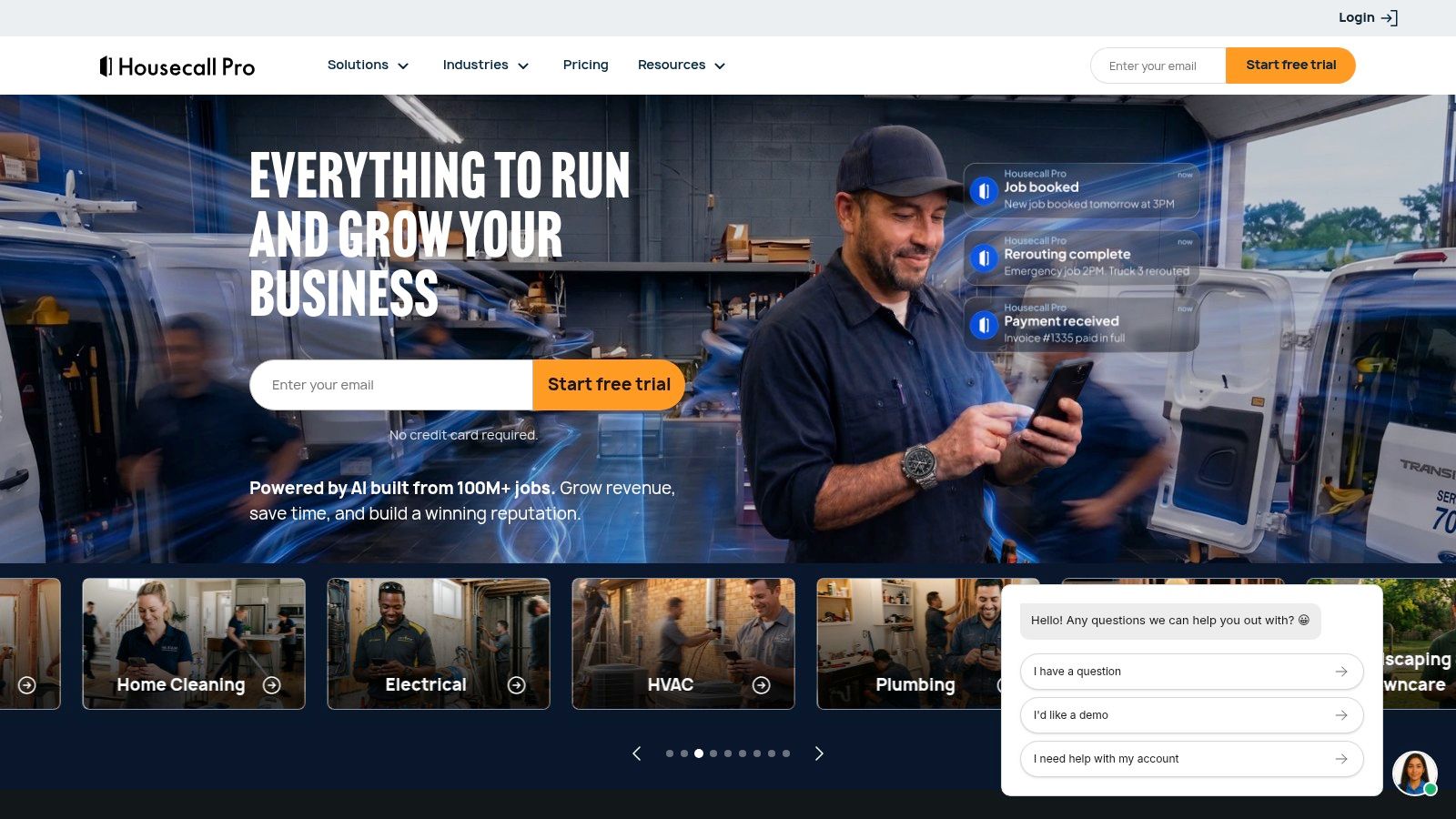
Residential service is the center of Housecall Pro. Scheduling, dispatch, online booking, estimates, invoices, customer notifications, mobile access for field staff, and online payment collection cover the daily run of service calls, panel work, and repeat visits. Contractors running multi phase commercial installations should test project handling carefully before committing.
As read on May 20, 2026, Housecall Pro lists Basic at $79 per month, or $59 billed annually, for one user, rising to MAX at $329 per month, or $299 billed annually, for eight users. A 14 day trial is available. The user ladder matters because Basic includes one user, Essentials includes five users, and MAX includes eight users.
Higher tiers add recurring service plans and visual sales proposals, while MAX adds route optimization. That makes the upper end more relevant for maintenance heavy residential work than for a solo operator who only needs booking and invoicing. Public pricing and a trial make evaluation straightforward, but add ons and payment processing can lift the total.
Price the crew that exists in six months, not the crew that exists today. A low entry tier stops being cheap when the third technician forces an upgrade.
Before signing, contractors should confirm in writing the plan's user limit, added user price, trial length, billing period, which features sit in add ons, card and ACH rates, and the data export available for customers, service plans, invoices, and payments.
3. FieldPulse

FieldPulse prices seats by role, which fits a small electrical business with several technicians and only one or two office managers. Customer management, scheduling, estimates, invoices, payments, and field team tools sit in one system. The vendor also describes electrical project tracking and job cost visibility, and contractors should test both against real workflows in a demo.
As read on May 20, 2026, FieldPulse lists the first user at $39 per month, additional Manager users at $20 per month, and Service Agent users at $10 per month. A 14 day trial with no credit card required is listed. Total cost depends entirely on the mix of roles, so a headline seat price means little without a named roster.
The dispatch board, technician location and status, mobile job records, estimates, invoices, payments, customer records, and job history cover service work end to end. Manager, Service Agent, and subcontractor roles carry different access, which helps owners limit what field staff can see. Vendor described electrical features include milestones, resource assignment, labor and material tracking, customer and site history, and offline access for some records.
Before signing, contractors should get in writing each seat price by role, how subcontractors are charged, the 14 day trial terms, the billing period, the scope of QuickBooks sync, which import fields and attachments transfer, and what a full data export contains.
4. Service Fusion

Flat rate pricing with unlimited users is the reason to look at Service Fusion. A growing multi technician service shop pays the plan rate rather than a new seat fee for every hire. A solo operator pays the same starting rate, which makes the platform harder to justify at that size.
As read on May 20, 2026, a Service Fusion vendor article says plans start at $245 per month. The full plan ladder and terms should be requested in writing because the electrical page doesn't display them. That request matters more here than with fully published pricing.
Where It Fits and Where It Does Not
- Office side: Drag and drop scheduling and dispatch connect to estimates, jobs, customer records, and service history.
- Field side: Mobile access covers job details, photos, notes, signatures, invoices, and payments, with an offline capable app described by the vendor.
- Accounting and extras: QuickBooks sync sits at the center, with fleet tracking and communication tools also available.
Service Fusion fits residential and light commercial service work. It's less suited to large, phased commercial projects that need detailed progress billing. Before signing, contractors should obtain the complete plan ladder, onboarding costs, billing period, cancellation notice, payment processing rates, whether users are unlimited on the chosen plan, and how customer, estimate, invoice, photo, and payment records are exported.
5. Workiz
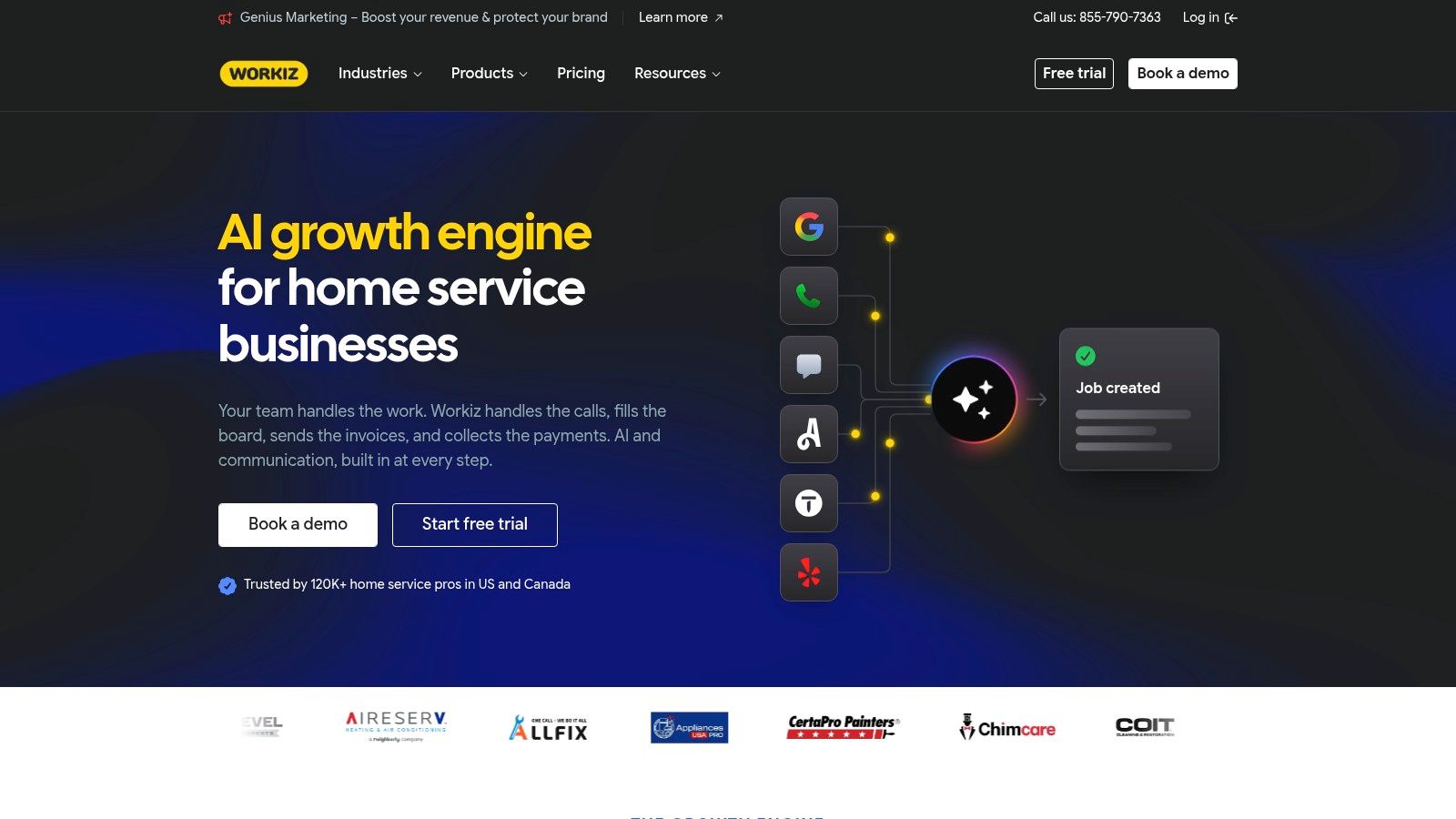
A phone heavy office is the clearest case for Workiz. Scheduling and job management come with a built in phone system, call tracking, and customer communication tied to the job record. That combination suits an electrical contractor whose office manager books most work by phone and needs calls, estimates, invoices, and client records connected.
As read on May 20, 2026, the official Workiz plans page uses request pricing and publishes no figure. The vendor advertises a seven day trial available without a credit card. The vendor FAQ says plans are billed annually, so commitment length needs direct confirmation.
Core work covers scheduling, dispatch, estimates, invoices, client management, a mobile app, QuickBooks Online sync, online payments, and a customer portal. The Ultimate tier adds flat rate pricing, service plans, inventory, checklists, equipment tracking, and multi day jobs. Those additions matter for repeat commercial maintenance and longer installations, not just one visit residential calls.
Check the phone bill separately: An integrated phone system only saves money when line, usage, and recording charges are priced in the quote.
Before signing, contractors should get an itemized written quote covering the annual billing period, cancellation and renewal terms, user limits, phone system charges, payment processing rates, onboarding fees, the seven day trial conditions, and the data export for call records, customers, jobs, and invoices.
6. FieldEdge

An established electrical service shop that has outgrown a simple dispatch tool is the target for FieldEdge. Electrical specific software, dispatching, pricing, quoting, invoicing, service agreements, and QuickBooks integration point to service operations with repeat customers and pricebook driven work. FieldEdge also describes onboarding that includes data transfer and training.
As read on May 20, 2026, FieldEdge lists Select, Premier, and Elite as quote only plans and its pricing page publishes no figure. Mobile app licenses are listed as two on Select, four on Premier, and six on Elite. A crew larger than the license count needs the added license cost before any comparison is honest.
Select covers scheduling, dispatch, customer management, work orders, service agreements, and pricebook and flat rate pricing tools. Premier adds advanced dispatch and multi option quotes. Elite lists Proposal Pro, two way texting, and warehouse inventory. QuickBooks Online and Desktop integration and job level profitability tools suit shops that track margin by job rather than by month.
The tier structure helps a buyer match features to a quote, but advanced quoting, inventory, and communication tools sit in higher tiers. Before signing, contractors should confirm in writing the quoted price for Select, Premier, or Elite, mobile license counts and added license fees, onboarding scope and cost, optional module pricing, billing and cancellation terms, and export rights for pricebook, customer, and job data.
7. ServiceTrade
Commercial work, not one off residential calls, is where ServiceTrade belongs. Recurring maintenance, inspections, deficiency documentation, deficiency quoting, and customer portals fit electrical businesses that manage service contracts across commercial sites. A small residential shop will likely pay for specialization it doesn't use.
As read on May 20, 2026, ServiceTrade says office users are free and subscriptions are priced around technician count, and exact packages require a quote because no simple monthly dollar amount is listed. That structure can keep office access predictable in a contract heavy business where several coordinators support a smaller field crew.
Scheduling supports recurring maintenance and contracted service rather than only same day dispatch. Mobile inspection records hold deficiency severity, photos, and videos, and those findings connect to online quotes with customer approval and quote pipeline tracking. The customer portal covers service requests, appointments, job history, and photos, which gives property managers a record without office staff resending documents.
The strength is inspection driven revenue, turning a documented fault into an approved quote. The limit is fit, since none of that helps a two person residential crew much. Before signing, contractors should confirm in writing how technician count is defined and audited, which office roles stay free, package price and billing period, implementation cost, which inspection features are included, cancellation terms, and export of inspection records, photos, deficiencies, quotes, and site history.
How the six electrical contractor platforms compare on published pricing, trial terms, and best fit
| Item | Published Pricing | Trial | Best For |
|---|---|---|---|
| Jobber | Core: $49 monthly or $29 monthly billed annually; Grow: $199 monthly or $149 billed annually, for one user | 14 days | Solo electricians and small residential crews |
| Housecall Pro | Basic: $79 monthly or $59 billed annually; MAX: $329 monthly or $299 billed annually | 14 days | Residential service operations |
| FieldPulse | First user: $39/month; additional Manager users: $20/month; Service Agent users: $10/month | 14 days; no credit card required | Smaller electrical businesses with multiple technicians |
| Service Fusion | Plans start at $245/month; full plan pricing requires a quote | Not specified | Growing, multi-technician service shops |
| Workiz | Request pricing | 7 days | Electrical contractors with phone-heavy offices |
| FieldEdge | Quote only | Not specified | Established electrical service shops |
| ServiceTrade | Quote-based; office users are free, pricing based on technician count | Not specified | Commercial electricians handling maintenance contracts and inspections |
Confirming Crew Pricing and Terms Before You Sign
A shortlist of two or three platforms is enough. Each one should match the trade mix first, residential service on one side and commercial maintenance and inspections on the other. Crew size comes next, because a per user plan, a per technician plan, and a flat rate plan produce three different totals for the same five people.
Each vendor should quote the exact roster in writing. That quote needs named office users, technicians, mobile licenses, and subcontractors, plus the price when one more technician joins. Contractors should also confirm the current figure on the vendor's own pricing page, because listed prices change and annual billing can hide a large upfront payment inside a low monthly number.
Trial length, billing period, renewal mechanism, and cancellation notice belong in the same written record. So do payment processing rates for card and ACH, any platform surcharge, onboarding fees, and charges for phone lines, texting, or added modules. A seven day trial and a 14 day trial allow very different amounts of real testing, and an annual plan needs a clear exit before the first payment clears.
Data terms deserve the same attention as price. Vendors should state what happens to customer records, property history, estimates, work orders, invoices, payments, photos, inspection records, and pricebook data if the account ends, what format the export arrives in, and whether extraction costs extra. A sample export file answers that faster than a sales call.
A live demo should run the workflows the business uses daily. Build an estimate on a phone, get it approved, dispatch it, add time and materials, collect a deposit, and invoice it without retyping. Test low signal use, repeat customer history, and the conversion from estimate to work order.
Pick the two platforms that match crew size and work type, request written quotes for the exact headcount this week, and run one real job through each trial from quote to paid invoice before signing anything.